
Spaghetti Carbonara
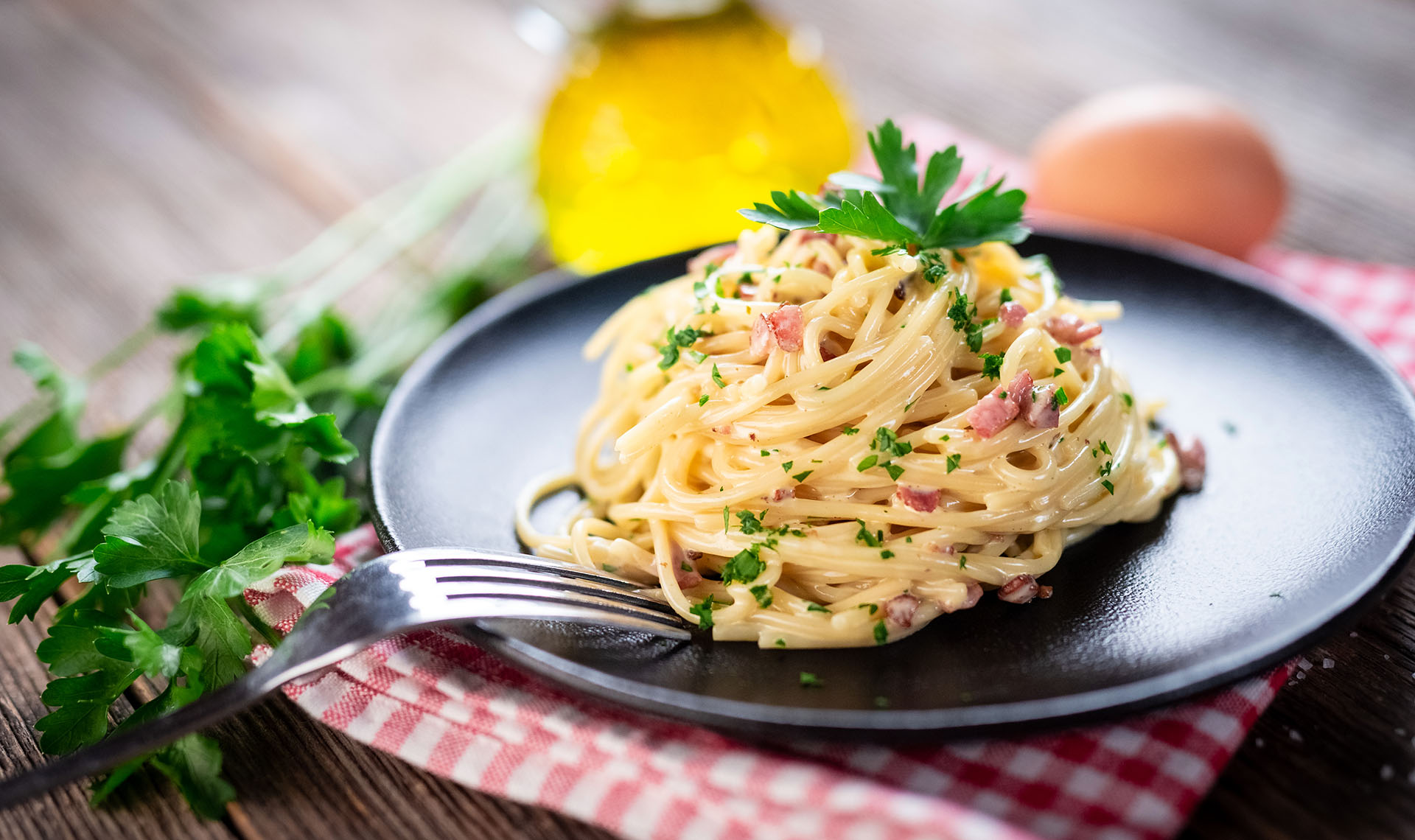
A classic pasta that delivers comfort without the fuss, finished with plenty of Parmigiano-Reggiano.
 Mary Evers discovered an early version of this recipe in a favorite magazine—now dog-eared, splashed with white wine, and clearly well loved. She’s made it so often since that the instructions have softened into instinct, and her signature flourish shows up in every silky forkful. Carbonara, in Mary’s hands, is less about precision and more about paying attention. Listen closely. Move with intention. And don’t answer the phone once the eggs are involved.
Prep Time
15 minutes
Total Time
25 minutes
Serves
4–6
(depending on who’s hovering)
Ingredients
- 1 lb uncooked linguine or thin spaghetti
- 3 Tbsp olive oil
- ½ lb pancetta, chopped
- 5 garlic cloves, chopped
(fresh is better than a jar for this recipe) - Kosher salt
- Freshly ground black pepper
- ½ cup dry white wine
- 3 large egg yolks
- 1 cup freshly grated Parmigiano-Reggiano
(divide in half) - ½ cup chopped flat-leaf parsley
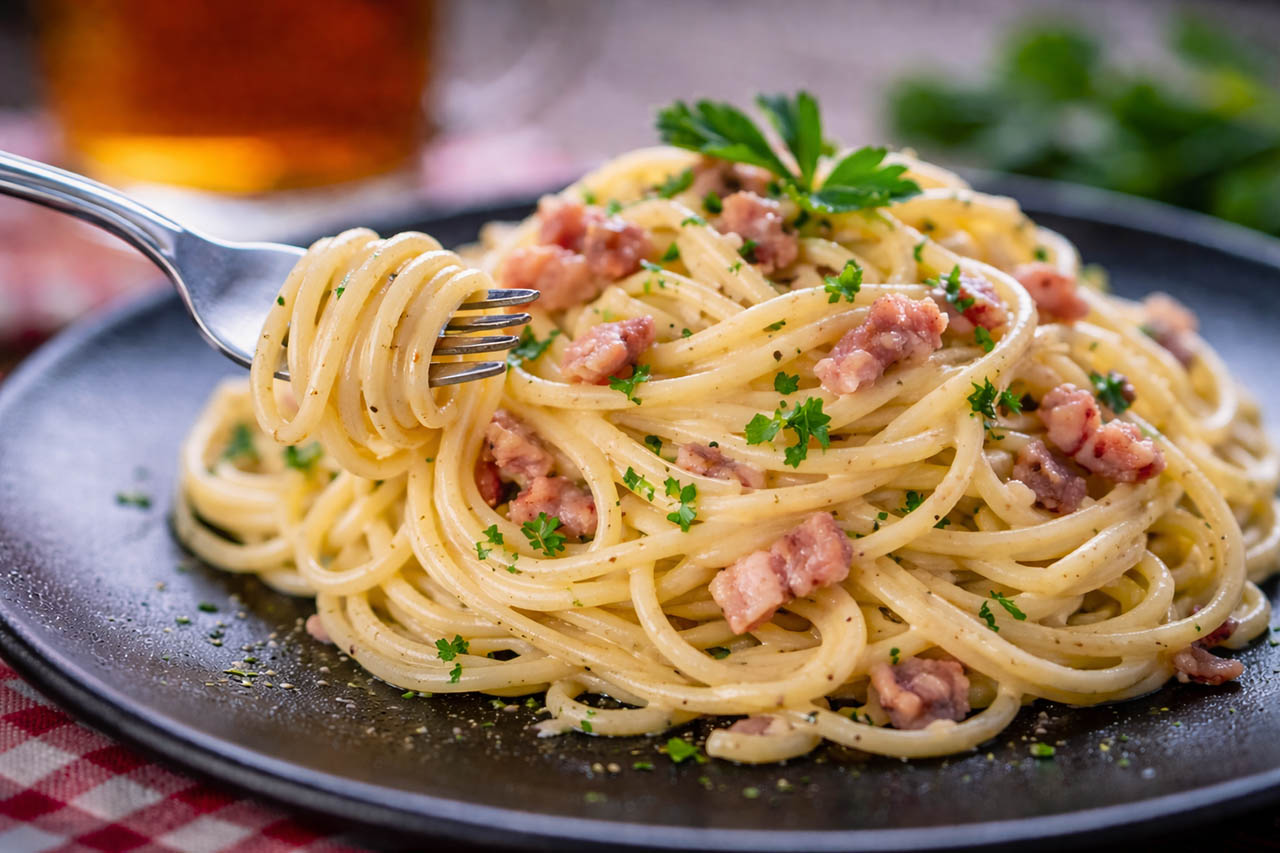
How it All Comes Together
Bring a large pot of generously salted water to a boil. Cook the pasta one minute shy of package directions. Drain, reserving 1½ cups of the cooking water. (This is liquid gold—guard it.)
- While the pasta cooks, heat the olive oil in a large, deep skillet over medium-high heat.
- Add the pancetta and cook until browned and fragrant, about 2–3 minutes.
- Add the garlic and a few turns of black pepper, stirring until just golden—about 1 minute.
- Pour in the wine and let it simmer, stirring occasionally, until reduced, 2–3 minutes. Lower the heat and keep warm just until the pasta is ready—do not let the pan dry out.
- In a medium bowl, whisk the egg yolks with a pinch of salt, pepper, and half of the grated cheese before tempering with pasta water.
- Slowly whisk in 1 cup of the reserved pasta water to temper the eggs. Be patient to prevent scrambled regrets.
- Add the drained pasta to the skillet with the pancetta and toss to combine. Remove from heat.
- Pour in the egg mixture and toss gently (but thoroughly) to coat the pasta.
- Add the remaining grated cheese seasoning with additional salt and pepper as needed.
- If the sauce needs loosening, add up to ½ cup more pasta water, a splash at a time.
- Add the parsley before serving.
Toss until glossy, creamy, and irresistible. Serve with a warm baguette and add a green salad to balance. Preset the table, because when carbonara is ready, it waits for no one.
Tea & the Suffragette Dames
When Disagreement Was The Work
Some women didn’t just enter difficult conversations — they stayed in them. As the suffrage movement gained momentum, disagreement didn’t disappear. It intensified. Women argued strategy. They clashed over priorities. They disagreed — sharply — about who the movement was for and how far it should go.
One Dame who refused to soften her convictions for the sake of unity was Ida B. Wells. Wells was a journalist, abolitionist, and suffragist — and she was famously unwilling to stay quiet when disagreement made others uncomfortable. She challenged racist exclusions within the suffrage movement itself, insisting that justice was not something to be negotiated later.
She didn’t shout. She didn’t posture. She didn’t retreat. She stated her case with clarity and courage — even when it cost her invitations, alliances, and applause. In 1913, when Black women were asked to march at the back of a suffrage parade to avoid upsetting white supporters, Wells refused. She didn’t derail the cause — she exposed its contradictions.
She stepped forward anyway, embodying a truth this chapter holds close:
Grace does not require agreement. And disagreement does not require disappearance.
Wells showed us that it is possible to stand firm without becoming brittle — to speak plainly without turning disagreement into spectacle. She understood that dignity is not granted by consensus; it is claimed by presence.
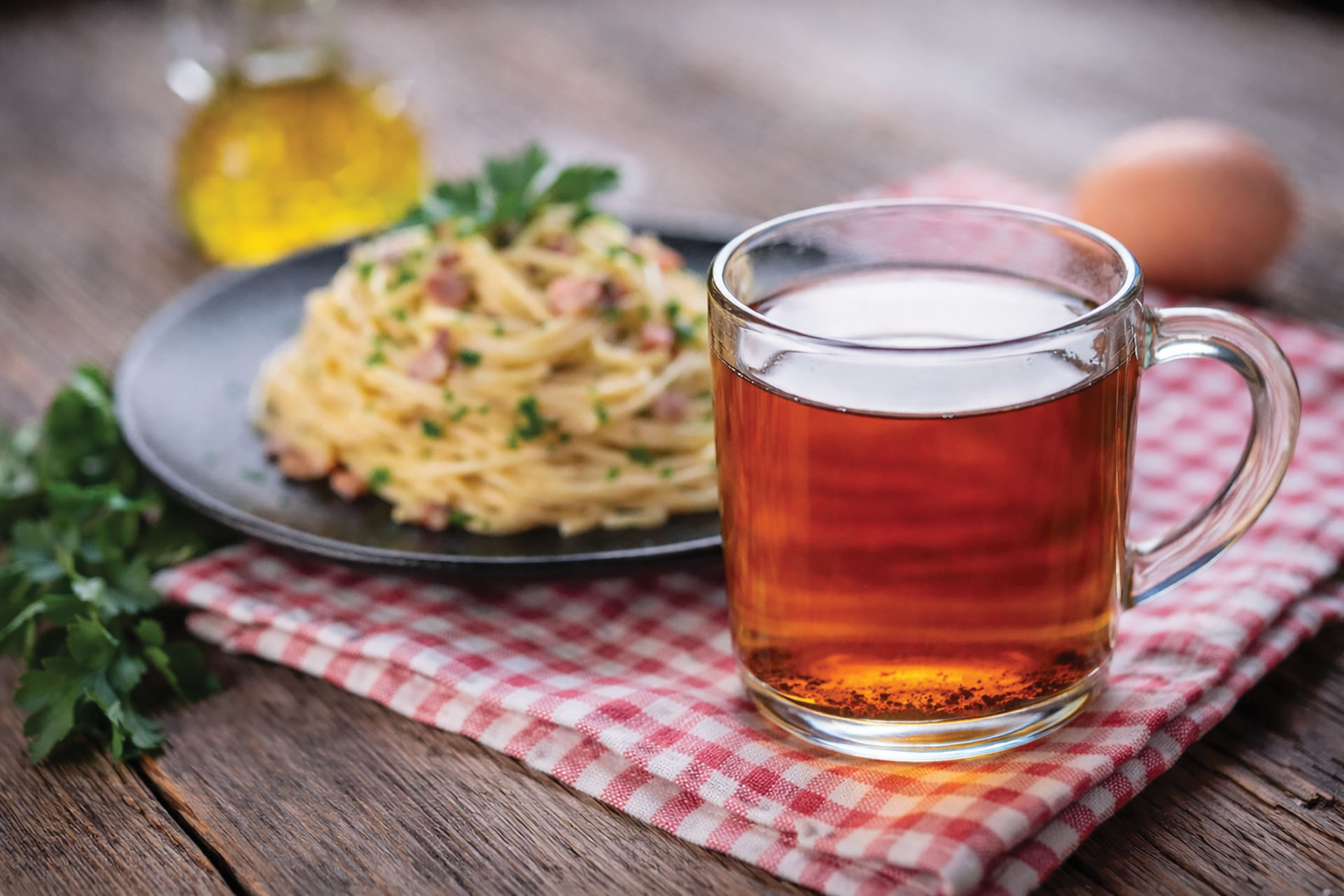
ROASTED BARLEY (Mugicha)
For a chapter about holding conviction without combustion, Mugicha offers a fitting companion. This roasted barley tea is steady, grounding, and quietly strong — no caffeine, no sharp edges, no need to perform.
Traditionally served hot or cold, Mugicha remains composed under pressure, much like the women who refused to abandon their beliefs simply because disagreement made others uncomfortable. A tea that doesn’t demand attention — yet leaves a lasting impression.